Imagine a world where your gadgets know exactly where you’re looking—no more awkwardly pretending to read the fine print on a menu. Wearables that track eye movements are stepping up the tech game, combining innovation with a sprinkle of magic. These devices don’t just keep you connected; they offer insights into your habits, preferences, and even your emotions.
Overview of Wearables That Can Track Eye Movements
Wearables that track eye movements integrate advanced technology to enhance user interaction. These devices monitor gaze direction, enabling insights into attention patterns and preferences. Smart glasses and headsets represent two primary forms of such wearables, displaying real-time data about the user’s visual focus.
Eye-tracking devices are utilized across various fields, including health, gaming, and marketing. In healthcare, they assist in diagnosing conditions like concussions and other visual impairments. Gaming companies use eye-tracking to create immersive experiences, allowing players to interact with virtual environments naturally.
The development of eye-tracking capabilities often involves optical sensors and cameras that capture eye movements. Data analytics software interprets the captured data, offering actionable insights into user behavior. This technology aims to enhance accessibility for individuals with disabilities by creating more intuitive interfaces.
Some notable products include the Tobii Dynavox, designed for communication needs, and the Microsoft HoloLens, which combines augmented reality with eye-tracking features. Both examples exemplify how wearables can transform interactions in their respective domains.
Future advancements in eye-tracking wearables promise greater accuracy and new applications in everyday scenarios. As technology evolves, the potential for wearables to change how users engage with digital content grows significantly. Users can expect more seamless experiences as these devices continue to refine how they analyze and respond to eye movements.
Technology Behind Eye Tracking
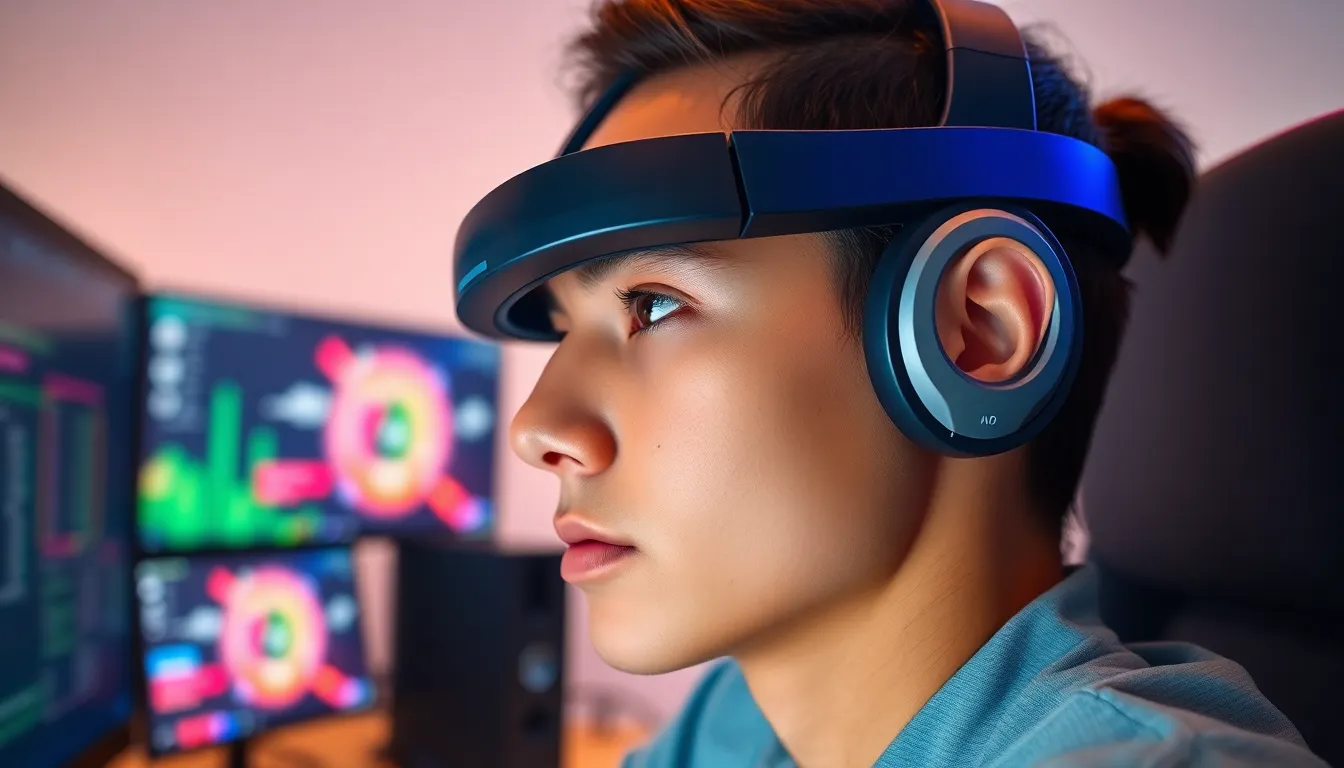
Eye-tracking technology utilizes advanced components to monitor and analyze gaze behavior. This technology enhances interactions and provides valuable insights into user engagement.
Sensors Used in Eye Tracking Wearables
Optical sensors serve as crucial elements in eye-tracking wearables. These sensors detect light reflections from the eyes, accurately determining gaze direction. Infrared cameras are frequently integrated, enabling precise tracking even in various lighting conditions. Ultrasonic sensors can measure blink rates and eye movements. Companies, like Tobii and FOVE, employ these technologies to facilitate user interactions and improve experiences in areas, such as gaming and healthcare.
Data Processing and Analysis
Data analytics software processes the information gathered from eye movements. Algorithms interpret sensor data to identify attention patterns and preferences. Real-time analytics facilitates instant feedback, adjusting content and interfaces based on user focus. Machine learning enhances accuracy by refining the models through user behavior over time. This dynamic analysis aids in personalized experiences across applications, including advertising and education, making interactions more intuitive.
Applications of Eye Tracking Wearables
Eye-tracking wearables play a crucial role in multiple industries, providing valuable insights and enhancing user interactions. They cater to diverse needs, from entertainment to healthcare.
Enhancing User Experience in Gaming
In gaming, eye-tracking wearables create immersive and dynamic environments. Gamers experience heightened engagement as these devices track gaze direction, allowing for intuitive control. Players can aim weapons with mere eye movement, transforming gameplay. Companies like FOVE incorporate this technology into VR headsets, enhancing realism through gaze-based interactions. Feedback is instantaneous, resulting in a more responsive gaming experience. Eye tracking fosters emotional connections, creating thrilling moments through realistic interactions.
Medical Uses and Accessibility
Eye-tracking technology serves critical functions in healthcare. Devices such as Tobii Dynavox assist individuals with communication impairments, offering ways to express thoughts through gaze control. Accurate diagnosis of conditions like concussions is achieved by analyzing eye movement patterns. Clinicians can evaluate cognitive function via response times to visual stimuli. Moreover, accessibility features help individuals with mobility challenges navigate devices effortlessly. Eye tracking enhances quality of life, breaking down barriers in communication and interaction across various settings.
Popular Wearable Devices on the Market
Several notable wearable devices track eye movements, showcasing advanced technology and diverse applications. Each device offers unique features tailored to specific user needs and industries.
Features and Specifications
The Tobii Dynavox features advanced eye-tracking technology designed for communication assistance. This device enables users to control computers and mobile devices using their gaze. Microsoft HoloLens integrates eye tracking into its augmented reality headset, enhancing user interaction with virtual content. FOVE VR headsets allow gamers to experience immersive environments by using eye movements for control. Companies prioritize optical sensors and infrared cameras for accuracy, ensuring that devices capture gaze direction effectively.
User Reviews and Feedback
Users often praise the Tobii Dynavox for its ease of use, highlighting how it enhances communication for individuals with speech impairments. Feedback on Microsoft HoloLens often focuses on its impressive augmented reality capabilities and seamless integration with other applications. Gamers using FOVE frequently mention the enhanced immersion and real-time response to eye movements, significantly improving their gaming experience. Positive experiences across various sectors indicate a growing acceptance of eye-tracking wearables in everyday applications. These devices receive ongoing updates, which frequently enhance functionality and user satisfaction based on real-world usage.
Future Trends in Eye Tracking Technology
Advancements in eye tracking technology are paving the way for innovative applications across diverse sectors. Increasingly, wearables utilize artificial intelligence to offer more personalized interactions, making devices more intuitive. Companies are developing algorithms that enhance the accuracy of gaze detection, enabling finer control over applications, including gaming and navigation.
Furthermore, integration with augmented reality platforms boosts the engaging nature of content. By optimizing real-time data processing, these wearables can adjust experiences based on user responses, leading to more immersive interactions. The medical field benefits significantly from this technology, particularly in rehabilitation programs that track eye movements to measure progress.
In education settings, eye-tracking wearables identify student engagement levels, allowing for tailored instructional methods. Users can gain insights into attention spans, consequently improving learning outcomes. Data collected from eye movement patterns can recommend personalized content, catering to individual preferences.
Wearables are also evolving to enhance accessibility for individuals with disabilities. Custom solutions assist those with cognitive or mobility challenges, fostering independence and improving quality of life. Continuous improvements in sensor technology contribute to the development of smaller, lighter, and more comfortable devices, facilitating everyday use.
As eye tracking becomes mainstream, privacy concerns necessitate transparent data usage policies. Manufacturers must prioritize user consent and data security while developing new functionalities. Enhanced user control over personal information will drive consumer trust, thus accelerating mainstream adoption.
Future trends in eye tracking technology suggest vibrant growth, particularly in personalized applications and cross-industry integrations. The horizon promises not only advancements in hardware but also broader societal impacts, as eye-tracking wearables become essential tools in everyday life.
Wearables that track eye movements are set to revolutionize how individuals interact with technology. By providing real-time insights into user focus and preferences, these devices enhance experiences across various fields. As advancements continue, the integration of artificial intelligence and improved sensor technology will drive innovation, making these wearables more intuitive and user-friendly.
The potential applications in healthcare, gaming, and education highlight their versatility and importance. With a commitment to privacy and data security, manufacturers can build consumer trust, paving the way for widespread adoption. As eye-tracking technology becomes more mainstream, it promises to play a vital role in shaping the future of user interaction and accessibility.